












 Disorders ADHD
How to Get Rid of Attention Deficit Hyperactivity Disorder - Related adhd disorders
TweetADHD - Learning Disabilities.
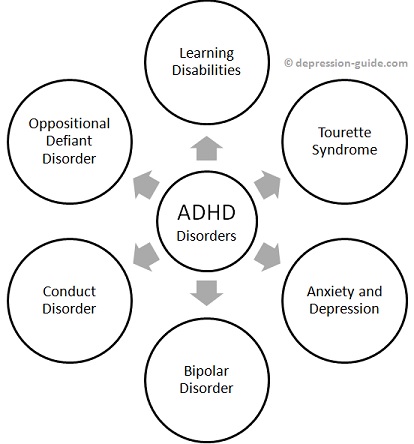
Many children with ADHD-approximately 20 to 30 percent-also have a specific learning disability (LD). In preschool years, these disabilities include difficulty in understanding certain sounds or words and/or difficulty in expressing oneself in words. In school age children, reading or spelling disabilities, writing disorders, and arithmetic disorders may appear. A type of reading disorder, dyslexia , is quite widespread. Reading disabilities affect up to 8 percent of elementary school children. ADHD - Learning Disabilities.
ADHD - Tourette Syndrome.
A very small proportion of people with ADHD have a neurological disorder called Tourette syndrome. People with Tourette syndrome have various nervous tics and repetitive mannerisms, such as eye blinks, facial twitches, or grimacing. Others may clear their throats frequently, snort, sniff, or bark out words. These behaviors can be controlled with medication. While very few children have this syndrome, many of the cases of Tourette syndrome have associated ADHD. In such cases, both disorders often require treatment that may include medications. ADHD - Tourette Syndrome.
ADHD - Oppositional Defiant Disorder.
As many as one-third to one-half of all children with ADHD-mostly boys-have another condition, known as oppositional defiant disorder (ODD). These children are often defiant, stubborn, non-compliant, have outbursts of temper, or become belligerent. They argue with adults and refuse to obey. ADHD - Oppositional Defiant Disorder.
ADHD - Conduct Disorder.
About 20 to 40 percent of ADHD children may eventually develop conduct disorder (CD), a more serious pattern of antisocial behavior. These children frequently lie or steal, fight with or bully others, and are at a real risk of getting into trouble at school or with the police. They violate the basic rights of other people, are aggressive toward people and/or animals, destroy property, break into people's homes, commit thefts, carry or use weapons, or engage in vandalism. These children or teens are at greater risk for substance use experimentation, and later dependence and abuse. They need immediate help. ADHD - Conduct Disorder.
ADHD - Anxiety and Depression.
Some children with ADHD often have co-occurring anxiety or depression. If the anxiety or depression is recognized and treated, the child will be better able to handle the problems that accompany ADHD. Conversely, effective treatment of ADHD can have a positive impact on anxiety as the child is better able to master academic tasks. ADHD - Anxiety and Depression.
ADHD - Bipolar Disorder.
There are no accurate statistics on how many children with ADHD also have bipolar disorder. Differentiating between ADHD and bipolar disorder in childhood can be difficult. In its classic form, bipolar disorder is characterized by mood cycling between periods of intense highs and lows. But in children, bipolar disorder often seems to be a rather chronic mood dysregulation with a mixture of elation, depression, and irritability. Furthermore, there are some symptoms that can be present both in ADHD and bipolar disorder, such as a high level of energy and a reduced need for sleep. Of the symptoms differentiating children with ADHD from those with bipolar disorder, elated mood and grandiosity of the bipolar child are distinguishing characteristics. ADHD - Bipolar Disorder.
Causes of ADHD
Disorders that Sometimes Accompany ADHD
Attention Deficit Hyperactivity Disorder in Adults - Treatment and medication of ADHD in Adults
Your Teenager with ADHD
ADHD Child - Your ADHD Child and School, The Family and the ADHD Child
ADHD Medication
ADHD Overview -- ADHD Treatment -- Diagnosing ADHD -- ADHD symptoms -- adhd


Sometimes crying or laughing
are the only options left,
and laughing feels better right now.


Stay Connected with DG


Current Issue
 Self Help Leaflets Take the help of our self help leaflets or booklets. |
 The DG Magazine All about living with depression |
Most Read on ADHD
ADHD
Hyperfocus
Albert Einstein and ADHD
Marijuana for ADD
Milk and Gluten Withdrawal
Hypnosis and ADD/ADHD
Dopamine and ADHD
ADHD Test
ADD and ADHD
Michael Phelps ADHD
Mineral deficiency and adhd
Super Focus
Winston Churchill and ADHD
Thoughts Become Things
ADHD Forums, Blogs, Community
Steps to conquering ADD-ADHD
Liquid Vitamins for ADD-ADHD
Neu-Becalm'd
L-Tyrosine and ADD-ADHD
Thiamine Deficiency and ADD-ADHD
Adderall ADD ADHD
Nutrition and ADD-ADHD
Hyperactive Children
Concerta
Pedophile
Causes of ADHD
Disorders related ADHD
Attention Deficit Hyperactivity Disorder in Adults
Treatment & medication of ADHD in Adults
Teenager ADHD
ADHD Child
ADHD Child and School
Family and the ADHD Child
ADHD Medication
ADHD Overview
ADHD Treatment
Diagnosing ADHD
ADHD symptoms
Amphetamine and Dextroamphetamine
Dextroamphetamine